
Cancer Risk Screening: Why Testing for Toxic Metals Matters
Cancer Risk Screening: Why Testing for Toxic Metals Matters
Introduction
Thank you for reading this post, don't forget to subscribe!Environmental exposure to toxic metals is a proven contributor to cancer development. Leading authorities such as the International Agency for Research on Cancer (IARC) classify arsenic, beryllium, cadmium, chromium (specifically hexavalent chromium), and nickel as Group 1 carcinogens. These metals induce carcinogenesis via oxidative stress, DNA damage, inflammation, and epigenetic alterations. Recent high-quality human studies demonstrate the presence of heavy metals in cancer patients’ biological samples and reinforce the clinical relevance of screening for chronic toxic metal burden.
Hair Tissue Mineral Analysis (HTMA) is a non-invasive and affordable tool for assessing long-term exposure to toxic metals. Unlike blood or urine, hair (like other body tissue) accumulates heavy metals over time, making it ideal for chronic exposure screening.
What the Evidence Shows
-
Systematic Review of 71 Human Studies (2024, BMC Public Health)
-
-
- In cancer patients, levels of toxic metals like cadmium (Cd), lead (Pb), arsenic (As), chromium (Cr VI), and nickel (Ni) were consistently higher than in healthy controls.
- Sample types included hair, blood, serum, and tissue.
- Cd in particular was significantly elevated in patients with breast, stomach, and testicular cancers.
- These metals generate reactive oxygen species (ROS), interfere with DNA repair, and mimic hormones like estrogen, contributing to carcinogenesis.
-
Khoshakhlagh, A.H., Mohammadzadeh, M. & Gruszecka-Kosowska, A. The preventive and carcinogenic effect of metals on cancer: a systematic review. BMC Public Health 24, 2079 (2024). https://doi.org/10.1186/s12889-024-19585-5
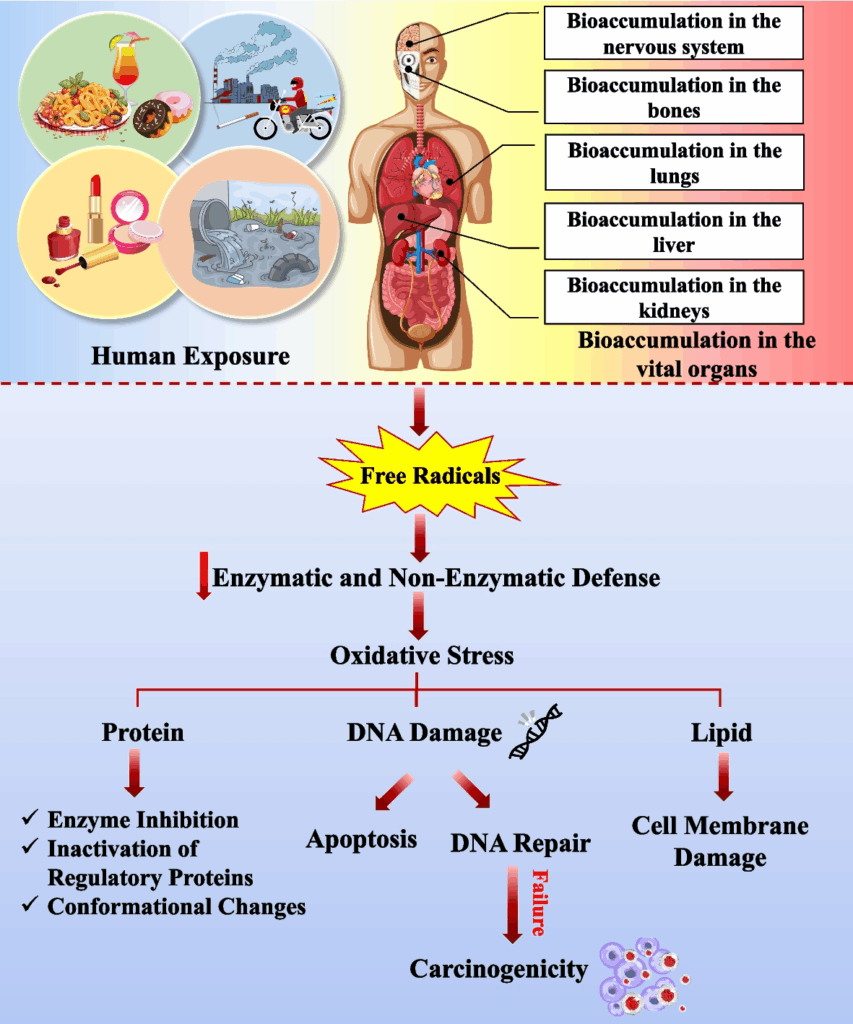
Mechanism of toxicity and carcinogenicity of metals after human exposure Khoshakhlagh, A.H., Mohammadzadeh, M. & Gruszecka-Kosowska, A. The preventive and carcinogenic effect of metals on cancer: a systematic review. BMC Public Health 24, 2079 (2024). https://doi.org/10.1186/s12889-024-19585-5
-
Meta-Analysis and Review (2024, BioMetals Journal)
- Cadmium, arsenic, and chromium were elevated in patients with lung, breast, prostate, and gastric cancer.
- Cadmium was identified in post-surgical tumor tissue, confirming direct incorporation into cancerous sites.
- Higher cadmium levels correlated with worse overall survival in lung cancer patients.
- HTMA was among the included sample types.
Coradduzza D, Congiargiu A, Azara E, Mammani IMA, De Miglio MR, Zinellu A, Carru C, Medici S. Heavy metals in biological samples of cancer patients: a systematic literature review. Biometals. 2024 Aug;37(4):803-817. doi: 10.1007/s10534-024-00583-4. Epub 2024 Feb 12. PMID: 38347295; PMCID: PMC11254964
-
Molecular Mechanisms: Heavy Metals Drive Tumorigenesis (2024, Discover Oncology)
- Mechanistic review confirmed that metals like As, Cd, Ni, and Cr(VI) activate molecular pathways that:
- Generate ROS
- Disrupt DNA methylation
- Inhibit apoptosis
- Promote immune evasion and cell proliferation
- These effects are directly linked to tumour initiation and progression across lung, skin, kidney, and gastric cancers.
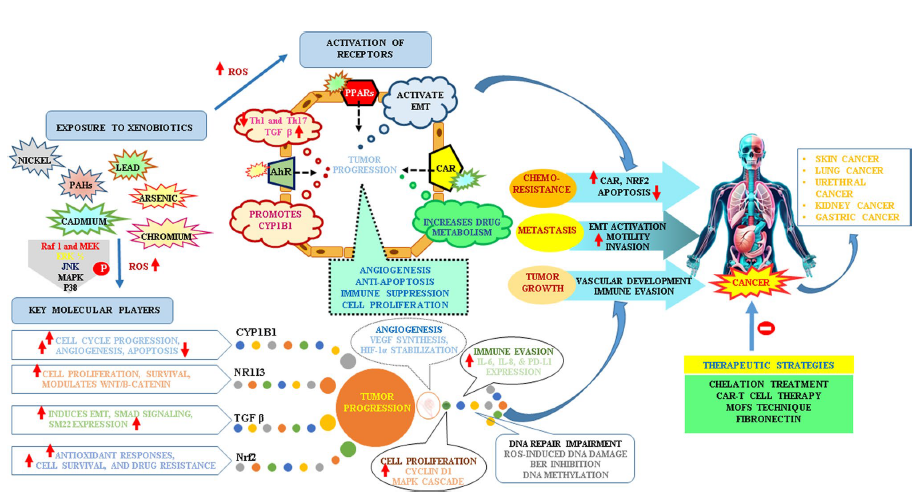
Pal, S., Firdous, S.M. Unravelling the role of heavy metals xenobiotics in cancer: a critical review. Discov Onc 15, 615 (2024). https://doi.org/10.1007/s12672-024-01417-y
Why HTMA?
- Non-invasive and cost-effective: A simple hair sample reflects cumulative metal burden.
- Detects chronic exposure: HTMA captures long-term accumulation missed in transient blood or urine tests.
- Clinically relevant: The emerging literature supports the value of HTMA in identifying cancer-relevant toxic metal loads.
Clinical Application
- Use HTMA to assess cancer risk factors in patients with chronic fatigue, infertility, hormone dysregulation, or unexplained neurological symptoms.
- HTMA as a baseline prior to or as treatment is initiated.
- Re-test HTMA post-therapy.
- Track changes in toxic metal load and mineral balances over time to guide detox strategies.
Conclusion
There is now substantial evidence that toxic metals—especially cadmium, arsenic, and chromium—contribute to cancer risk and progression. HTMA provides a powerful, accessible screening tool to detect these burdens. As environmental exposures continue to rise, integrating HTMA into cancer risk assessment protocols is both evidence-based and essential.
More Information
- www.interclinical.com.au/hair to download the Referral Form
- Register & Order kits (no charge) at InterClinical interclinical.com.au/register
- KickStart Training Schedule. 3-part, Free Zoom Small Group Training

No Comments
Sorry, the comment form is closed at this time.